


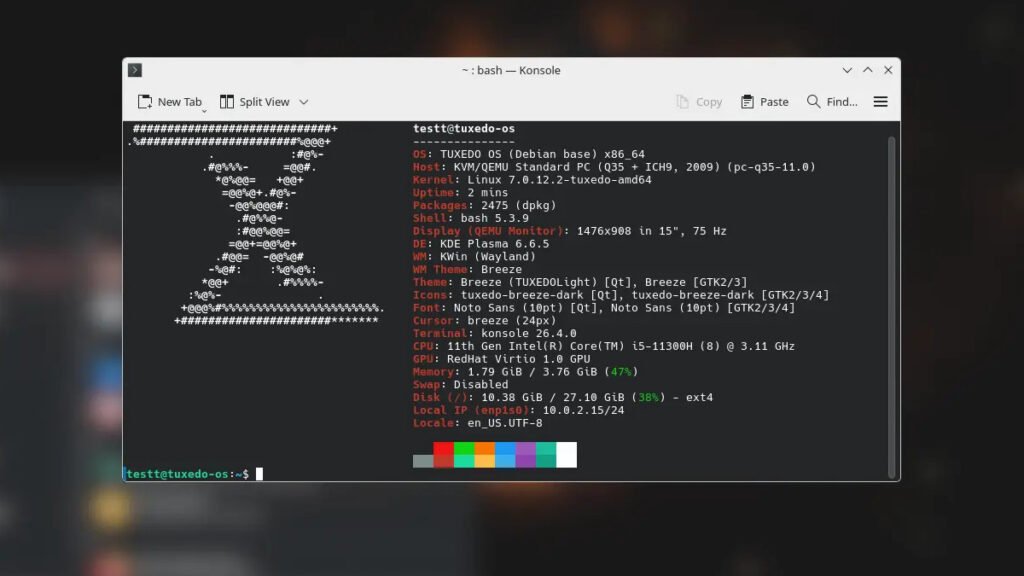
TUXEDO Computers moves its popular KDE-focused distribution to Debian Testing as a permanent base, citing backporting issues, Snap pressure, and concerns over Canonical’s direction.
German Linux hardware vendor TUXEDO Computers has announced that its TUXEDO OS distribution will no longer be based on Ubuntu. The company is moving the foundation of its popular KDE Plasma-focused operating system to Debian’s Testing branch on a permanent basis.
TUXEDO OS has long shipped as a polished, out-of-the-box Ubuntu LTS derivative on the company’s laptops and desktops. The new direction, detailed in an official announcement this week, reflects growing frustration with the limitations of aging Ubuntu LTS releases and Canonical’s evolving packaging and strategic priorities.
Key Reasons for the Switch
The TUXEDO team laid out several technical and strategic challenges in its announcement:
“As an LTS release ages, backporting modern software becomes increasingly difficult. Newer dependencies are often unavailable or only provided in outdated versions, making it significantly more complex to integrate current software reliably into an older package base. Updating central libraries such as Qt, on which KDE is built, can also cause software from the Ubuntu repositories to stop working correctly. This is not a challenge unique to TUXEDO OS — KDE neon regularly faces the same issue.”
Additional concerns include Canonical’s push toward Snap packages:
“It is becoming increasingly difficult to keep the Snap packaging system out of the operating system, as Canonical is distributing more and more applications exclusively as Snap packages while gradually pushing traditional DEB packages into the background.”
The announcement also references issues with Canonical’s approach to AI components and slower delivery of security updates.

Permanent Move to Debian Testing (“Continuous Debian”)
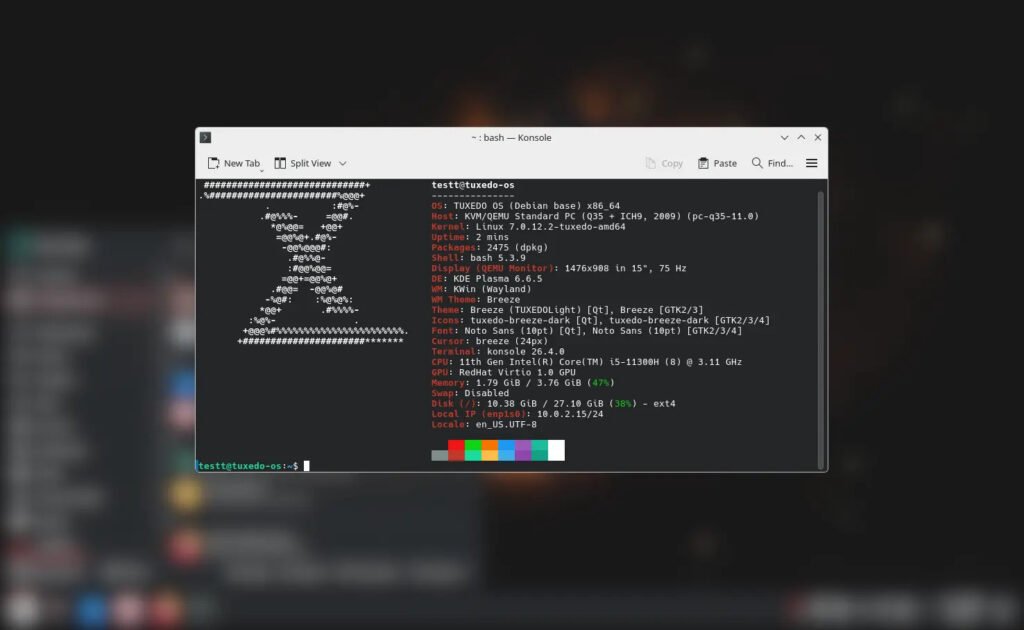
Rather than rebasing once and then moving to a future Debian Stable release, TUXEDO plans to keep Debian Testing as the permanent foundation. The company believes this approach — sometimes described internally as a “hybrid” or “Continuous Debian” model — will give it better access to newer packages while still allowing careful curation for stability and hardware compatibility.
This change aligns with TUXEDO OS’s long-standing goal of delivering the latest KDE Plasma desktop and modern applications without being held back by the conservative nature of Ubuntu LTS base systems.
What Users Can Expect
The move is expected to make it easier for TUXEDO to provide fresher software and reduce maintenance friction around core libraries and dependencies. TUXEDO has emphasized that it will continue to thoroughly test and stabilize the distribution for its hardware, similar to how it has handled Ubuntu-based releases.
Existing users should not see immediate disruption. The first TUXEDO OS release based on the new Debian Testing foundation is still in development, with no specific release date announced yet.
The decision gives TUXEDO greater independence from Canonical’s roadmap and packaging direction — a step that echoes similar moves or discussions in other Linux projects seeking more control over their software stack.
Read the full official announcement:
A new foundation for TUXEDO OS: Switching to Debian
Recent articles from DebugPoint.com
- LibreOffice 26.8: Best New Featureson October 7, 2026
- Fedora 45 Workstation: Top New Featureson October 4, 2026
- GNOME 51: Best New Featureson October 2, 2026
- Frame: The First Linux X Server Written Entirely in Assembly Languageon July 19, 2026
- Weston 16.0 Released: Key New Featureson July 16, 2026