


Mozilla has announced that Firefox is moving from a four-week to a two-week release cycle starting September 2026, aiming to deliver features and updates faster to users.
Starting in September 2026, the browser will shift from a four-week release cycle to a two-week one. This change aims to get new features, fixes, and improvements into users’ hands more quickly.
The Official Announcement
Sylvestre Ledru, Director of Engineering at Mozilla, shared the news in a post to the dev-platform mailing list on July 9, 2026. He described the move as an experiment for both Firefox Desktop and Android.
“We are planning to move Firefox Desktop and Android from a 4-week release cadence to a 2-week release cadence starting in September 2026. This will be an experiment. The goal is to give work that is ready to ship more frequent opportunities to reach users, while making the release process more predictable and reducing pressure on uplifts.” — Sylvestre Ledru
The change is already visible in the updated schedule. Firefox 154 (August 18) will be the last four-week release. Firefox 155 arrives on September 1, followed by 156 on September 15, and 157 on September 29.
Reason for the change
Mozilla’s goals with the shorter cycle include:
- Delivering ready features faster to users.
- Creating a more predictable and less stressful release process.
- Reducing pressure around uplifts (backporting fixes to stable branches).
Importantly, this doesn’t mean rushing unfinished work. Features that need more time can still bake properly. Mozilla will monitor the experiment closely and tweak it if needed.
This move comes shortly after Google announced a similar shift to a bi-weekly development cycle for Chrome (while keeping its stable releases on a longer cadence). It looks like the browser world is leaning toward quicker iterations overall.
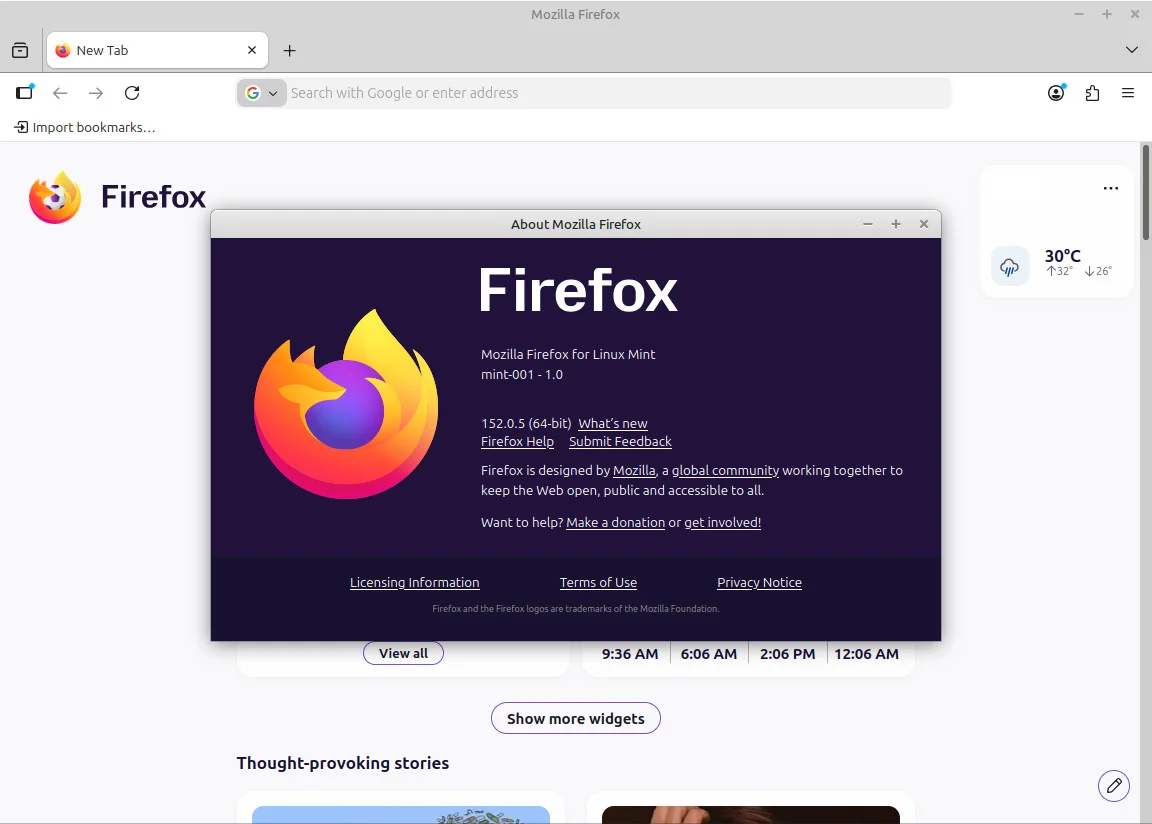
As per the end user (like us) experience goes, here are some benefits –
- Faster feature delivery: You’ll see improvements, security fixes, and new capabilities more often.
- Smaller, safer updates: Each release brings fewer changes, which could mean fewer bugs and easier debugging.
- No compromise on quality (hopefully): Mozilla is clear that this is about better flow, not cutting corners.
Wrapping up
This experiment starts in September, so we’ll know soon enough how it plays out. If it works well, it could become the new normal for Firefox.
What do you think? Are you excited about faster Firefox updates, or do you prefer the current cadence? Drop your thoughts in the comments.
Cheers.
Official Source: Firefox release cadence experiment: moving to 2 weeks starting in Septembe
Recent articles from DebugPoint.com
- Frame: The First Linux X Server Written Entirely in Assembly Languageon July 19, 2026
- Weston 16.0 Released: Key New Featureson July 16, 2026
- GNOME OS is Getting a ‘Test Center’ – Making Experimental Software Testing Actually Usableon July 14, 2026
- Debian 12.15 and 13.6 Released: Bookworm Enters LTS with Support Until 2028on July 14, 2026
- KDE Frameworks 6.28.0 Released: Key Featureson July 12, 2026